
Short answer: Size the cavity from your die, choose the package family from the I/O count, match the pitch to your socket or board, check bond-finger pitch and plating, then pick the lid and seal method. Choose an adhesive (B-stage epoxy) lid for fast non-hermetic samples, or an Au80Sn20-soldered Kovar lid on a ceramic package when you need a hermetic seal. This post summarises our full tutorial, [How to choose an open-cavity IC package and matching lid](/buying-guides/open-cavity-ic-package-lid-selection), which has the complete tables, a to-scale drawing and the FAQ.
The packages and lids below are made by Shanghai Xintaowei New Materials Co., Ltd. MST distributes them. All values come from the manufacturer catalogue for parts listed on MST Store. Confirm every value against the drawing for your exact part number.
Step 1: Size the cavity from the die
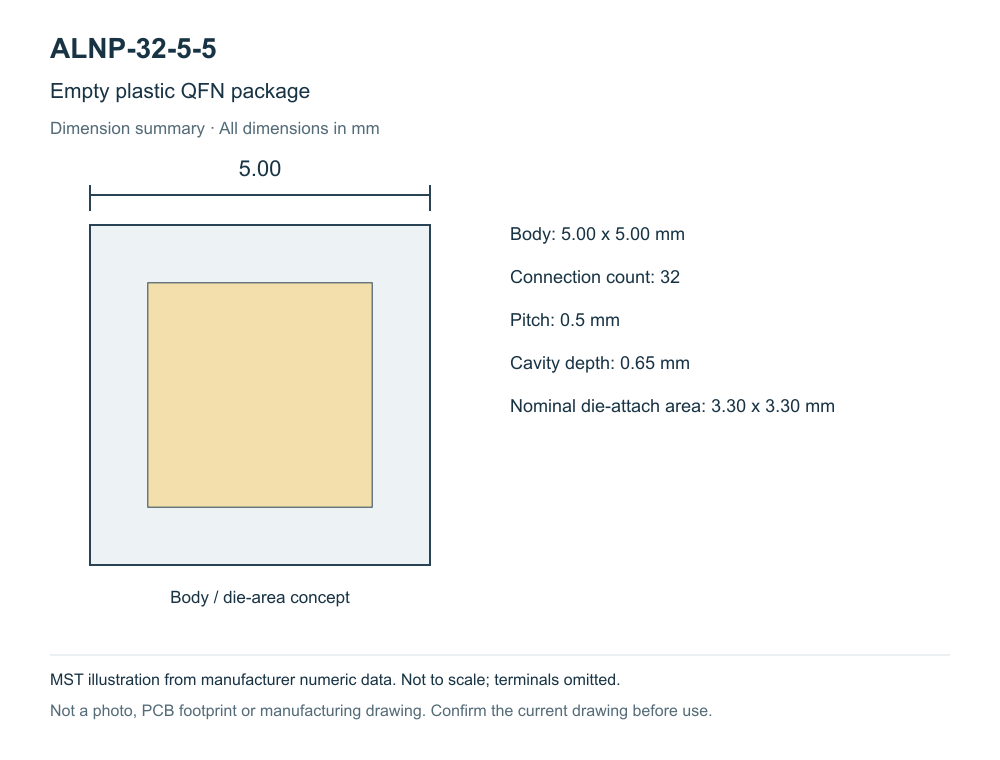
MST schematic drawn from the manufacturer numeric specifications. It is not to scale and omits terminals.
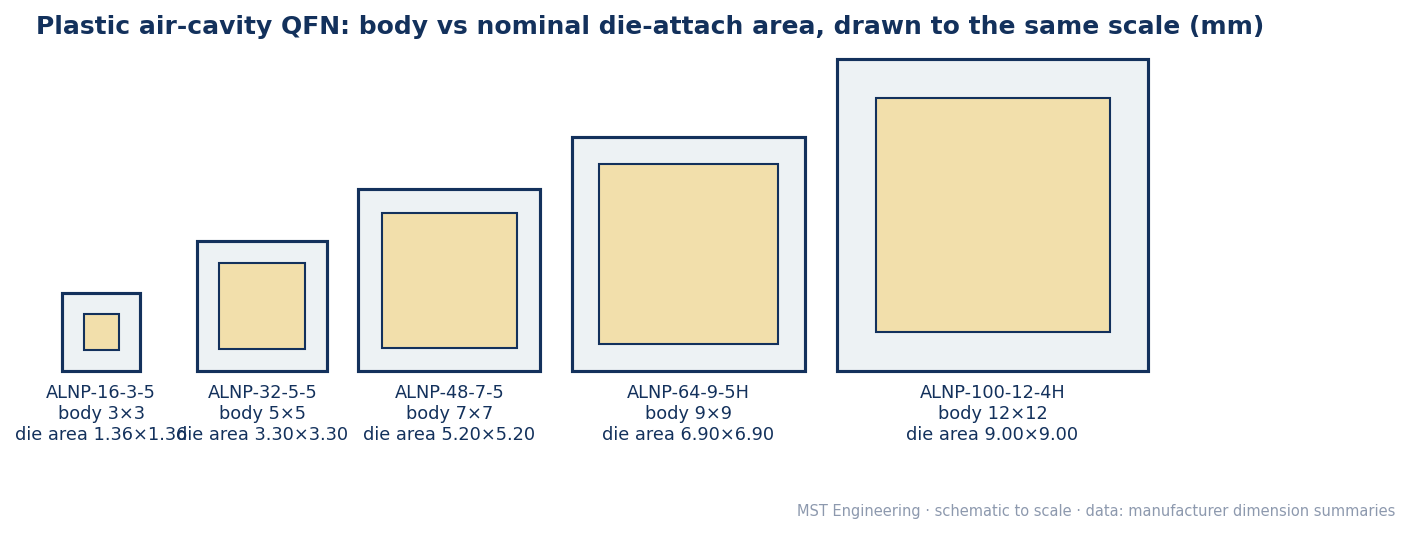
Diagram drawn by MST Engineering to scale from the manufacturer dimension summaries.
The die, its die-attach fillet and the wire exit must fit inside the die-attach area. The standard cavity depth of the plastic air-cavity QFN (ALNP) family is 0.65 mm, so die thickness plus bond line plus wire loop height must stay below it. If the die is close to the limit, move up one body size.
| Body size | Max. die-attach area | Example part numbers |
|---|---|---|
| 3 × 3 mm | 1.36 × 1.36 mm | [ALNP-16-3-5](/store/empty-ic-packages/ALNP-16-3-5) |
| 5 × 5 mm | 3.30 × 3.30 mm | [ALNP-32-5-5](/store/empty-ic-packages/ALNP-32-5-5) |
| 7 × 7 mm | 5.20 × 5.20 mm | [ALNP-48-7-5](/store/empty-ic-packages/ALNP-48-7-5) |
| 9 × 9 mm | 6.90 × 6.90 mm | ALNP-64-9-5H |
| 12 × 12 mm | 9.00 × 9.00 mm | ALNP-100-12-4H |
Part numbers read ALNP-<lead count>-<body mm>-<pitch>, where the last field is the pitch in tenths of a millimetre (5 = 0.5 mm, 4 = 0.4 mm).
Step 2: Choose the package family from the I/O count
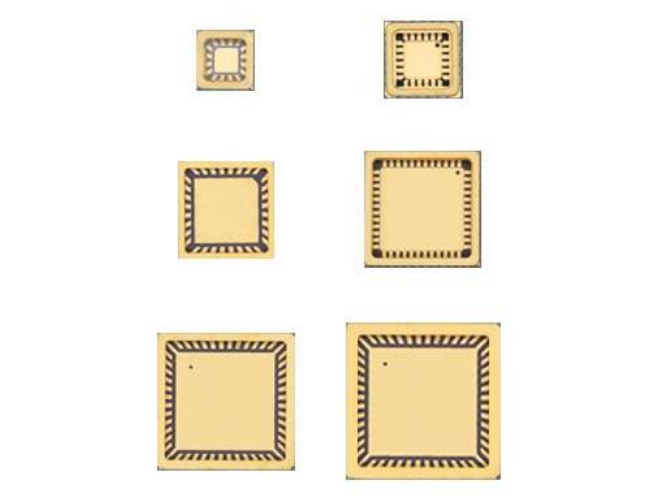
Representative series photo from the Shanghai Xintaowei 2026 product brochure. Individual part numbers may look different.
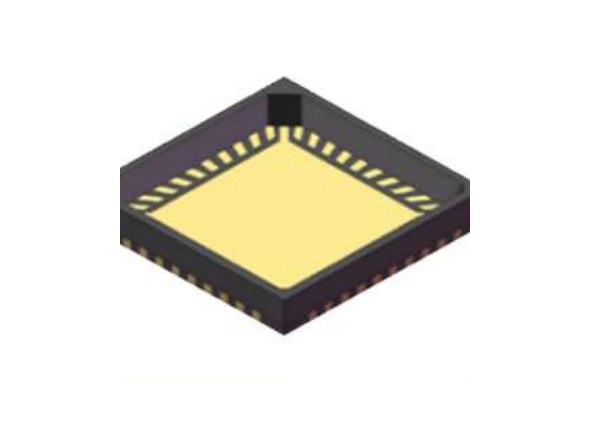
Manufacturer rendering (Shanghai Xintaowei 2026 product brochure), not a photograph.
| I/O count | Family | Example on MST Store |
|---|---|---|
| Up to about 100 | Plastic air-cavity QFN, or HTCC ceramic QFN for hermetic builds | ALNP-100-12-4H (12 × 12 mm, 0.4 mm), ALNC-48-7-5C (ceramic, 7 × 7 mm) |
| About 144, leaded | Ceramic QFP | CQFP144-01 (19 × 19 mm, 12 × 12 mm die), ALNC-144-20-5 (20 × 20 mm) |
| 256 to 512 | Cavity BGA | BGA1313-256BALLS (13 × 13 mm, 0.7 mm pitch), BGA2020-512BALLS (20 × 20 mm) |
Step 3: Match the pitch to your socket or board
The QFN outlines follow JEDEC MO-220, so a standard QFN socket with the same body size, lead count and pitch should fit. If your socket has a centre ground contact, also check the exposed-pad size. A 0.4 mm pitch needs a finer-pitch socket and tighter PCB rules than 0.5 mm. See our [QFN test socket selection tutorial](/community/c/test-sockets).
Step 4: Check bond fingers, plating and process limits
- BGA1313-256BALLS has a bond-finger pitch of about 0.13 mm. Ask for the bond-finger drawing before you lay out the die pads.
- The LCP plastic body of ALNP-48-7-5 is rated for die-attach cure up to 200 °C and wire bonding up to 100 °C. If your process needs more heat, use ceramic.
Step 5: Choose the lid and the seal
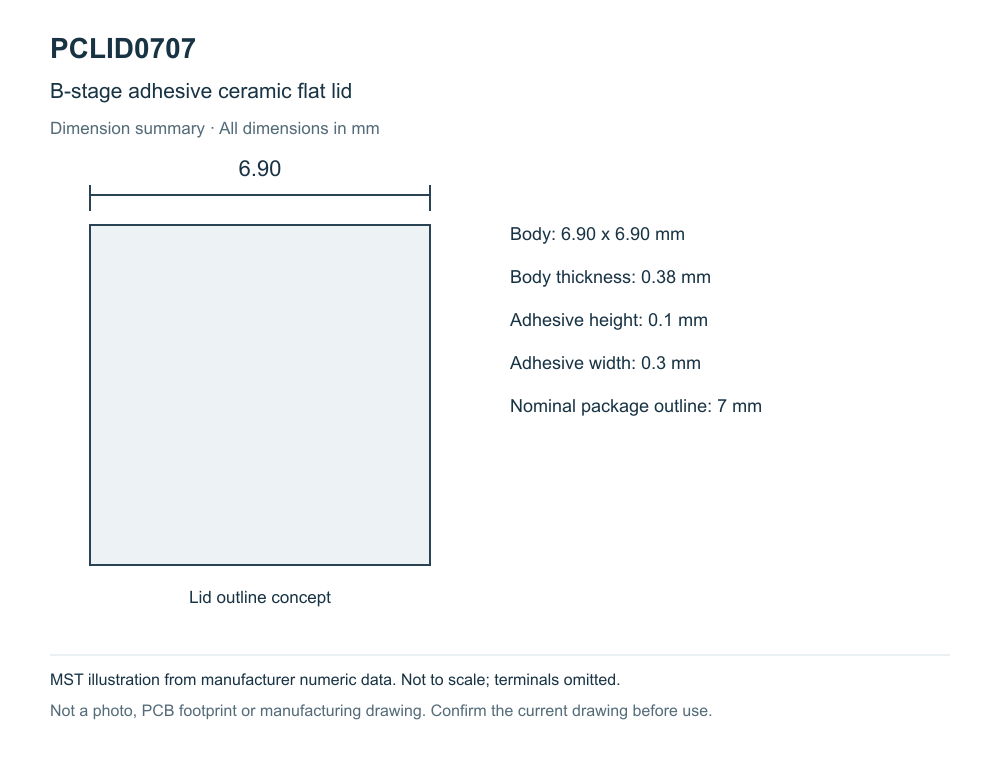
MST schematic drawn from the manufacturer numeric specifications. It is not to scale.
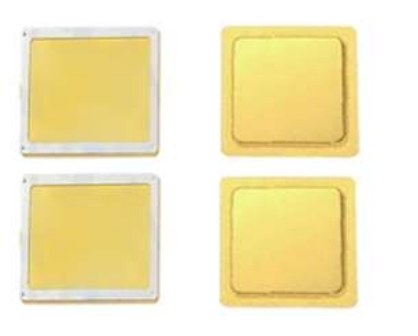
Representative series photo from the Shanghai Xintaowei 2026 product brochure.
| Lid | Material and seal | Fits |
|---|---|---|
| PCLID0303 to PCLID1010 | Black alumina, 0.38 mm thick, pre-applied B-stage epoxy | Plastic air-cavity QFN of the same body size |
| PCLID1212 | Black alumina, 11.85 × 11.85 mm, B-stage epoxy | 12 × 12 mm plastic QFN |
| QFN77LIDKAU | Kovar, Ni/Au plated, Au80Sn20 solder ring, 6.90 × 6.90 mm | 7 × 7 mm ceramic QFN such as ALNC-48-7-5C |
The manufacturer reference cure for the B-stage adhesive is about 30 minutes at 175 °C. Adhesive-sealed lids are not hermetic to military-grade leak rates. The Au80Sn20 eutectic melts at 280 °C. Hermeticity is normally checked to MIL-STD-883 Test Method 1014.
RFQ checklist
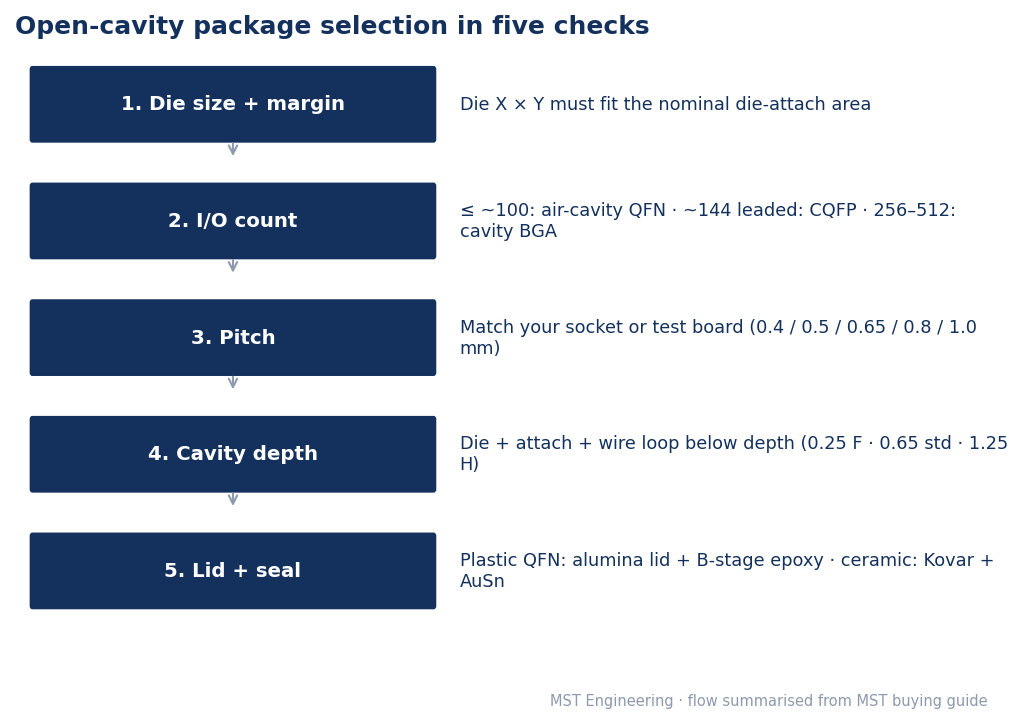
Flowchart by MST Engineering.
1. Die X × Y × thickness, pad count and a non-confidential bond-pad outline.
2. Package type, body size, I/O count and pitch.
3. Highest die-attach, wire-bond and lid-seal temperature.
4. Hermetic or non-hermetic, and the lid material.
5. Quantity of packages and lids.
Original OEM documents (links only)
1. ALN (Shanghai), open-cavity ceramic and plastic package manufacturer. https://www.alnchina.com.cn/
2. JEDEC, package outline standards (MO-220 QFN and others). https://www.jedec.org/
3. DLA ASSIST QuickSearch, MIL-STD-883 test methods. https://quicksearch.dla.mil/
Ask an engineer
Send your die size, pad count and package preference through [Ask an engineer](/rfq?entry_source=ask_engineer&search_term=open-cavity+IC+package&quantity=1&community_path=%2Fbuying-guides%2Fopen-cavity-ic-package-lid-selection). MST checks the package and lid with the manufacturer and replies with price and lead time. Browse [empty IC packages](/store/empty-ic-packages) and [IC package lids](/store/ic-package-lids). Or post a [find-part request](/community/new?kind=part_request&mpn=ALNP-32-5-5). For parts outside this list, use a [sourcing RFQ](/services/sourcing-rfq?sourcing_mode=supplier_match).
Parts