
Select a silicon chamber part by its process, approved drawing and material requirements—not its photograph alone. This guide helps buyers compare silicon boats, etch rings, showerheads and RTP guard rings, prepare an enquiry and agree what must be checked before ordering. Jishengwei (Ningbo) manufactures the monocrystalline silicon product families linked below; MST is its agent. These are made-to-drawing or made-to-sample enquiries.
Which silicon part do you need?
Start with the tool and the component's position. The process groupings below come from the supplier catalogue; they are not approvals for a particular equipment model. The checks are an MST purchasing checklist, not published specifications for these products.
| Your application | Start with | Drawing details to compare |
|---|---|---|
| Wafer support in a diffusion furnace | Silicon boat / tower | Wafer diameter, slot count and pitch, slot/contact geometry, overall envelope and base interface |
| Other diffusion-furnace positions | Injector, pedestal / cap or fin | Exact installation position, mating features and the relevant hole, support or profile details |
| A ring around the wafer in an etch chamber | Focus ring; identify edge / ground rings separately | Cross-section, steps, thickness, inner/outer diameters and position relative to the wafer and support |
| Upper or peripheral etch-chamber parts | Upper ground ring or C shroud / C section | Chamber position, cross-section, locating features and interfaces |
| A perforated etch-chamber plate | Showerhead / electrode | Hole pattern, hole dimensions, thickness, working-face profile, backside and mounting interface |
| A PVD/CVD carrier position | Silicon tray | Pocket/support geometry, overall envelope, wafer arrangement and mating interface |
| A ring in an RTP tool | Guard ring / edge ring | Tool configuration, wafer diameter, cross-section, support geometry and thermal-process requirements |
An etch edge ring and an RTP edge ring can share a name without sharing a drawing or qualification. Keep the equipment manufacturer's part number and drawing revision in the enquiry. The Store's SI codes identify enquiry families, not OEM part numbers.
Silicon boat: diameter is only the starting point
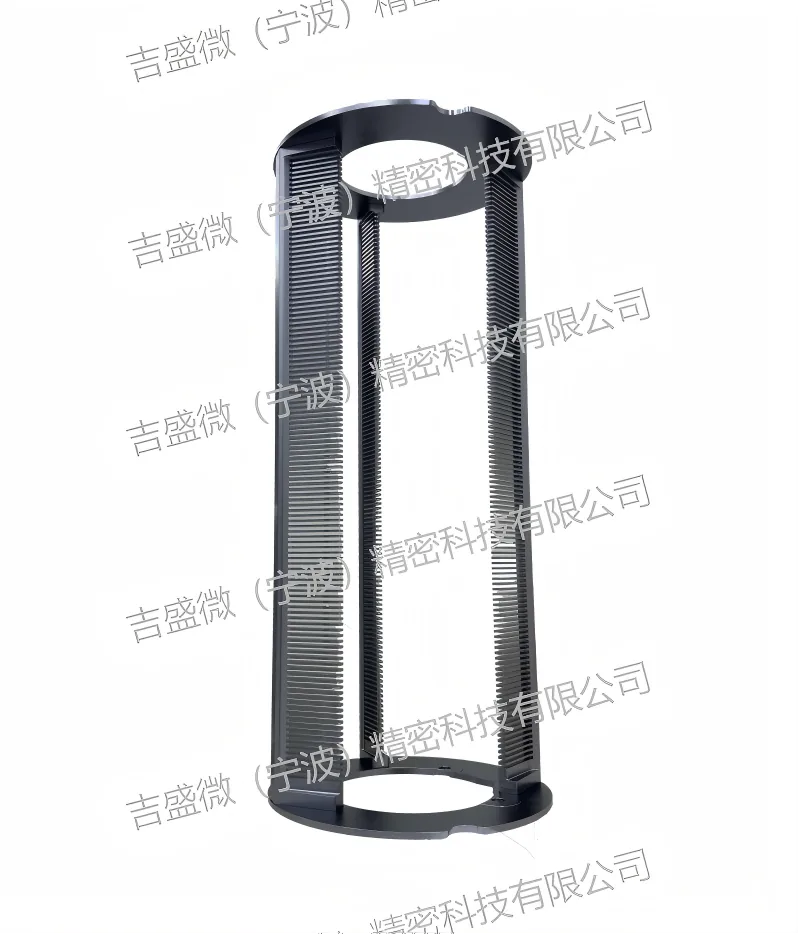
Supplier catalogue photograph; dimensions must come from the agreed drawing or sample.
For a boat or tower, compare wafer size together with slot pitch, usable slot count, wafer-contact features and the tool's loading/base interface. Ask which drawing features control acceptance. If copying a used sample, distinguish its original design from wear, chips or deformation; agree how missing dimensions will be established before manufacture.
Example: two boats advertised for the same wafer diameter are not a confirmed match if their slot spacing or base interfaces differ. Send the drawing revision and loading configuration with the wafer size.
Focus ring: why the cross-section matters
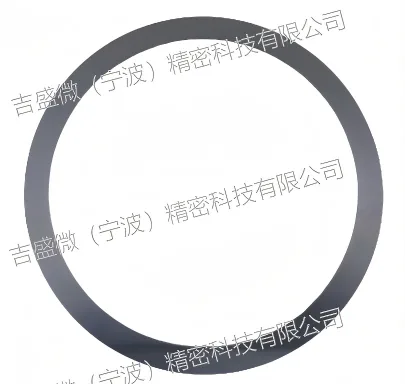
Supplier catalogue photograph; appearance does not establish material or dimensional equivalence.
Research links wafer-edge height differences to plasma-sheath distortion and tilted etch profiles. This explains why a ring's cross-section matters; it does not establish a universal replacement interval or tolerance. Primary experimental study
For purchasing, compare the entire approved section: inner/outer diameters, steps, thickness, mating surfaces and specified material properties. Keep resistivity, surface finish and cleanliness requirements explicit where the drawing or process specification requires them. Do not infer those values from “silicon” or from a seller's photograph.
If edge performance changed after replacement, send the old/new drawing revisions, inspection results and the observed process change to the responsible equipment/process team. A parts enquiry alone cannot establish the cause or approve a recipe change.
Showerhead: the holes and the backside both matter
Silicon-electrode manufacturing involves controlled hole drilling and surface geometry. These are functional features, not merely appearance details. Manufacturer's technical overview
Ask for a dimensioned hole map, the working-face and backside drawings, mounting details and the required inspection scope. Matching outside diameter and hole count alone is insufficient. Clarify whether the request covers the silicon plate only or an assembly, and identify any separate mating components. Do not assume that similarly named electrodes fit the same chamber.
Comparing a marketplace listing with a drawing-based quote
Use the same questions for every supplier, including surplus and marketplace sellers:
| Check | Evidence to request | If it is missing |
|---|---|---|
| Identity | Tool/chamber model, part number and drawing revision | Treat it as an identification enquiry |
| Condition | New, used or refurbished status; photographs of the actual offered item where applicable | Ask before comparing prices |
| Geometry | Critical dimensions, tolerances and agreed inspection method | Do not approve by photograph alone |
| Material | Required silicon grade and applicable purity/resistivity/orientation records | Mark the requirement as unconfirmed |
| Acceptance | Surface/cleanliness requirements, traceability and inspection deliverables | Agree scope before placing the order |
| Delivery scope | Quantity, dispatch estimate, packing, destination, freight and customs responsibilities | Separate manufacture from transport and arrival |
Silicon, silicon carbide and quartz are different material specifications. A shared shape or application name does not establish an acceptable substitution. Use the material required by the approved drawing or obtain the responsible engineering team's approval for a change.
Copy this enquiry checklist
- Tool manufacturer/model and chamber or installation position:
- Component name, OEM part number if known, and existing supplier reference:
- Drawing file, revision, units and critical dimensions/tolerances:
- Sample condition and features to measure, if no complete drawing is available:
- Material and required supporting records:
- Surface, cleanliness, inspection and packaging requirements:
- Quantity, trial or production requirement, destination and requested arrival date:
- Quote scope: part only or assembly; dispatch, freight and customs stated separately:
Keep proprietary drawings in the private RFQ rather than a public community post. A photograph and label can start identification; an approved drawing or agreed sample specification is needed to confirm what will be supplied.
Browse the parts and request a quotation
- Start a private parts RFQ — change the enquiry reference to the part you need and include your drawing or sample reference.
Can you quote from a photo? A photo can start identification. Confirming configuration and price may require a drawing, measurements or a sample review.
Are these stocked, qualified OEM replacements? The linked entries describe supplier product families for enquiry. They do not certify interchangeability, stock or qualification for your tool.
What price and lead time apply? Both are confirmed for the drawing, quantity and quotation scope. Dispatch is different from arrival; freight and customs must be agreed separately.
Evidence and scope
Product families, process groupings, monocrystalline-silicon material and photographs come from Jishengwei (Ningbo)'s supplied catalogue. It does not state part-specific dimensions, numerical material grades, operating limits or OEM approvals. The linked research and manufacturer overview explain general engineering considerations; they do not qualify Jishengwei products or imply a supply relationship with those sources. The selection tables and enquiry checklist are MST's practical purchasing guidance.
Catalog parts in this guide